Sunday, 7 January 2018

Narrative for characters

From the research for my dissertation, I found that I should give the characters a reason as to why they are a hero and a villain. So I developed a script, showcasing the back story leading to the present moment.


(did on notion.so)

From this script, I designed the scene of the present moment.


this resolves and supports my dissertation answer showcasing everything that I've learned through posing, colour and personality. 

Wednesday, 3 January 2018

false hero wrong assumpptions

After researching more into the false hero through Propps character theory, I discovered that what I understood about the false hero at the beginning being the role who is behind the scenes and is not witnessed until later on in the narrative. Changed after I looked int the false hero's functions, described as the role that appears in the disappearance of the hero and tries to claim that he is the hero with reasoning.

One example that shows a false hero is from The Princess and The Frog, where the main male hero has been turned into a frog and someone else disguises himself as him, almost stealing his identity. This changed the way I viewed my whole argument of a character being behind the scenes and helping the character out.

Although this is ok, as I now have a new argument for a character that focuses on having different roles within a narrative and how this type of character can have advantages and disadvantages from role switching. Also how the changes in roles effects the viewer's perception of the character.

Friday, 22 December 2017

Movement through live action film/tv

I was talking with my support tutor when they suggested a show, explaining personality coming from movement. The tv series called Peaky blinders has many characters, these characters do present a "don't mess with us" or "we don't care what you think" feeling from their walk, here's an example;


Just this simple walk establishes who they are and this can be used as performance for animators to express the feeling even more with the characters they create, which I hope to do with my animation. Just from observing I can feel the strength and power of these characters, almost feeling like they pose a threat which they are doing.


Thursday, 21 December 2017

Colour Palettes (development of characters)

Colour is everywhere and helps visually describe many elements in everyday life and is an importance in animation, colours help to understand feelings and personalities, a character displays.  Understanding character roles, helps understand how the character is represented by colour, Ying and Yang is an example that demonstrates good and bad which I'm trying to incorporate into my character designs.

Many characters are being made and can be depicted wrong because of the colours used, this Article demonstrates what colours are used for different character types, placing them in good/bad category. 

I naturally choose colours already associated with my characters, being a goldish brown for my hero and a dark purple for my villain, as seen in this character design:


I've also taken the advantage of colour with my narrative backstory where I have created a concept that has an in-between colour symbolising the relationship of both characters in the past.


Wednesday, 13 December 2017

Character appearance (development)

After creating my base characters which can be seen in the blog previously, I started to work on their appearance, this being the face as I want to create a new style for myself. Here are examples:


Drawing these faces took a while and I wondered if it was even necessary to have for the animation as I'm going to be doing a walk cycle, from a side view perspective.

I then thought about the research on shapes and conveying personality through movement, and the idea sparked of leaving it to the audience's imagination. Letting the audience decide who this faceless character depicts is more important than the way they look and so I have decided to leave the face blank to also speed up the process.

Wednesday, 6 December 2017

Story telling (development of project)

My dissertation covers the topic of narrative structure, allowing me to discover ways of developing a narrative that is explored by characters. For the development of my practical, I have started to create a simple narrative that involves two characters, both representing the two roles I'm focusing on, being the Hero and Villian.

So far I'm using the knowledge I've gained from my research and I'm trying to identify how each character fits the role they act. this is the development so far:


As seen, the characters are undergoing a new style that I'm undertaking to understand values in greyscale, as I want to expand my knowledge as it will help with my understanding of colour theory. this was inspired by Sycra, a concept/character design artist on Youtube.

The characters designs are inspired by fantasy warrior types, I hope the characters develop alongside the narrative I create. As inspiration for the narrative structure, I have looked at the Lion King made by Disney and have picked out the most important parts that both the hero and villain act out. and am trying to incorporate the logic into their traits.

Friday, 1 December 2017

Man walking in 100 ways

I found a video of a guy doing 100 different walks on a treadmill, he illustrates from his movement so many character behaviours, He is able to even mimic feminine movement in his shape. here's the video:

Whats important about this video is the aspect that a simple form can depict all these different character roles which im trying to resemble, I want to create a simple figure that acts the way a "Hero" does and then applying the aesthetics on top so that the viewer then can identify who they are.

I also did an experiment of covering up the words on the video and asked people to tell me his personality trait and they identified most of them correctly, showing that movement from a simple form can show many behaviours

Tuesday, 28 November 2017

movement through ballet and curves

Simple shapes give an understanding of the form of the character which is what I'm trying to develop in the animation I am making. I was advised to look up a video from Vimeo of a ballet dancer performing and animated lines were rotoscoped on to her. Here's the clip:


This is so helpful as it basically represents what my animation idea is, using simple forms to play or reenact an action using the character personality traits and these produce curve lines that we can see in the video above.

Heres another example of a walk cycle by Felix Sputnik:


As you can see how the lines have different curves of motions, This will guide me when I do my practicle


Tuesday, 14 November 2017

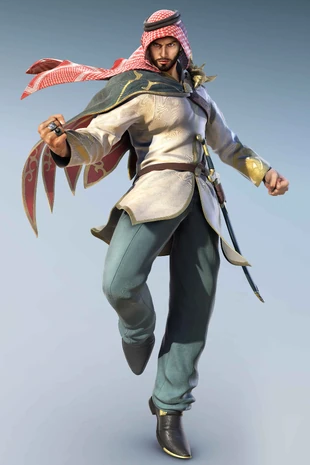
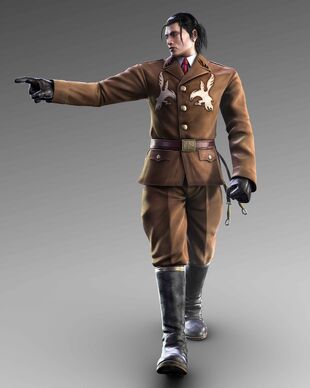
Character movement through Traits (Tekken 7)

characters
  stance
    the stance depicts their fighting style, and this shows us that a character is either a "Hero" or "Villain" or has any of the characters roles from Propps character theory.

  I'm going to be talking about some examples from a game that has a variety of characters, all represented and depicted as different character roles and traits.

      Lucky Chloe
        Shows the traits of an all-out Japanese girl that is westernised and there is clearly an anime influence on her appearance. There's also the cultural aspect of an idol from the way she acts. Her visual representation feels heroic and positive using a freestyle dance fighting style.

      Shaheen
        Clearly depicts an Arabian vibe, his stance shows strength like a soldier which reflects his fighting style from a military background, the light colours help identify that he looks like a "Hero".

      Sergei Dragunov
TK7
        Just from his stance, we can already clearly identify that he's Russian using a Commando Sambo fighting style, his appearance also reflects his body language and attitude which also identifies that he looks like "Villain" trying to make orders to others.

  Why is this important?
    This is important for myself to understand what it is, from these specif stances and body language these characters depict. This will help make the character I present in my animation so that it is easily recognisable to the viewer what each character depicts


Tuesday, 7 November 2017

TimeTable/gantt chart

I had a meeting with Aly from student support to help me with keeping me organized with this project, so we made a timetable for me to keep a check of where I am and should be for my practical and dissertation.


It seems like I'm sticking to this timetable at this current time but due to an event upcoming in a weeks time may make me behind but I hope I don't get behind.

Thoughts

During this week i had have conversation with Different people about my idea and people have said the following

  -Think about other cultures besides Western and Eastern animation (implying my own culture)
  -Consider looking at peoples thought process of what is a Hero to them.
  -Make a simple character that can display all movement and then add aesthetics.

The talk with Aly also made me think about a game that shows good examples of cultures and aesthetics called Tekken, as i am a fan of the game this is going to be helpful as i know a lot about the characters and their backgrounds as discussed with Aly

Friday, 3 November 2017

starting the project

Mindmap


Made this a few weeks back showcasing planning of the essay.

Research

I created Pinterest boards for Hero's and Villain's which were to identify the characters I mentioned in the last blog:

Hero's
Villain's

Thinking about how these characters were made from peoples experience in life or from a result of what they think about when just creating a story, it's important as this could ultimately be a factor for testing my theory of what is considered to be the character roles we place.

Practical

I started to make a walk cycle as a test because it's going to help me understand the movement I want to create for the final product;

this is the simple guide I made
 and here's an almost finished walk

I'm hoping to create a simple character that then moves like the depictions of the character roles I've researched and explained in my Dissertation. This will develop as I start researching.
  

Friday, 13 October 2017

After 2nd tutorial with Fred

After meeting up with Fred I finally had an idea of where my essay is going. Heres the structure:


Before this meeting, I had researched what defines a Hero and Villain and analysed characters who have the qualities needed for these roles:


Also did some reading of Propps character theory and found these quotes which help with the knowledge leading this essay:
By the next tutorial, I will have bullet points of research and ideas ready to be discussed and have designed some concept of characters.

Friday, 28 April 2017

Practical character design

For my practical i decided to work on showcasing my question in the form of character design, I focused on the three roles i talked about in my Essay, which are the Hero, Princess and False Hero who play big parts in a story.

The following images show them all together and as indivisuals. each indivisual has been described as their role and what they do in the story, alongside their personalities.

i love the final results of each character as i was trying to use the best  style i have to express each role.


Wednesday, 26 April 2017

Pulled section of Essay

I pulled out this massive section from my essay because I had a bit off an issue with it. this issue involved testing what I've written to see if it helps the argument or rather theory to prove Propp's character theory, here is the section:

The amount of detail used to convey the characters and background depends on the genre as it helps to represent what the series is all about, one example of a comedy slice of life anime is “Nichijou”, made to look simple with limited detail but is supported by the intense comedy animation sequences to make each sequence very exaggerated with detail, which adds on to the character personality trait. The character personality is easily established allowing the viewer to know how this character is going to react, showcasing the many situations of “Nichijou”(every day like) where the audience can relate to each character's position and can easily identify the expression of the character, thanks to how the animator conveyed the feeling of the character.

There are many sequences that gives the audience a chance to appreciate the animation but one, in particular, is the 4 minutes sequenced called “Nichijou everyday life part 65 (episode 16)”.
We are instantly introduced to 2 main protagonists that are confronted by a policeman looking for someone who is carrying a bag full of counterfeit bills, which one of the main girl protagonists is supposedly holding, and suits the description. She instantly over reacts with guilt causing the other main protagonist to question her friend and comes to the conclusion that it can’t be her, then suddenly the girl holding the bag raises her hands up ready to get cuffed which looks suspicious to the policeman, and her friend starts to overreact but still tries to reason if it truly is her friend, and ends up telling the policeman that “she is getting ready just in case a volleyball comes by” the policeman accepted the reasoning, but within the moment we see her bowing in front of the policeman with what it seems to be a counterfeit bill placed on the ground and therefore makes the policeman really suspicious of this girl. He questioned the girl if it is counterfeit money which she replies with it being real money and a bribe to let her go.

The scene then transitions to the policeman grabbing the bag intensively, opening it up; taking out what’s in the bag which appears to be her yaoi (homosexual) manga/comic, from this we see her start stressing, causing her to unleash her strength that could potential injure somebody. The animation from this point becomes intensive as she strikes the police officer, causing him to throw all the pages in the air, we then see her jumping high in the air to catch each page. As she lands collecting some of the pages, she looks up towards her friend who has one of the pages, with a surprised face as she looks at the comic; causing her to be traumatised allowing for her friend to take advantage, the animation then shows the girl going towards the traumatised friend to perform a wrestling move ending up with her friend slamming the ground and flying in the air as she collects the page, a posh man enters the scene picking up the pages causing him to receive a kick. seconds after, the girl counts how many pages she had collected she noticed a page was missing and it happened to be in the mouth of a goat chewing on the page, causing her to reperform the wrestling move on the goat. The sequence ends with her walking away with a lot of stress caused by the amount of strength she used. (Nichijou Everyday life part 65 (Episode 16), 2011)

As we can see, the animators were able to convey each character emotions and demonstrate the personality traits given to each character, which makes it easy to identify for the audience, I found some reviews that fans of the series have written about this episode.

NICHIJOU EVERYDAY LIFE PART 65 (EPISODE 16)
Your Bibliography: Nichijou Everyday life part 65 (Episode 16). (2011). [video] Japan: Kyoto Animation.


The test involved asking people if they could connect and relate to the character but it seemed like people either got confused at what was happening or they didn't find the intense moments in the animation funny enough. Some pointed out that it is another cultures comedy that only works if you have been exposed to most of it, which really surprised me and completely failed to help with the argument I was presenting, so I had to take it out and replace it with a film that still carries the culture but people can actuly relate to it because its got human asspects.

Monday, 10 April 2017

study task 5: Writing an Introduction

Within this essay I am to explore how animators visually convey character personality traits, I will be researching as to how characters are developed and created in a way to suit their respected personality traits, this will include looking at how characters are thought up through a few processes of gathering ideas and then are produced into the final drawing concepts. My essay will cover the different approaches involved as to how the character is created and then presented in an animation format. As to how the character is representing their traits, there will be further investigations into how animators use different techniques to showcase these traits.

There are various amounts of animations across all genres and styles that give the viewer a way to connect to the character’s personality traits, to discover what makes the viewer feel connected to the character I will find and compare related texts that indicate what goes on for the viewer and the animators. Most of these animations will consist between looking at American, European and Asian animations to compare how they convey a character’s personality trait and whether there is a stereotypical result between the three; from this result, we can correlate whether characters are made from a structure of set rules that all animators accept and follow or are made breaking the set rules as to how the character’s acts.

If the result of animators following a structure of set rules are true, there should be a further reason and research as to why animators convey these certain ways with these set rules. If there is we can determine that there is a structure to making a character, does it mean that the animator can choose to go against these set rules?


My hypothesis behind the role of how animators convey character personality traits is that in order for the animators to create these traits, there will be a lot of planning and referencing to actor’s performances in films. This should provide a theory whether it is possible to convey these traits from a personal or referencing stand point.

Wednesday, 22 March 2017

Study Task 4: Choosing a Research Question

My question is going to explore the topic, Aesthetics of character design and technique used to convey a characters personality traits. With research, I will be able to find solutions to my question that will be testable in order to define the result.

The process I would like to undertake will allow me to focus on finding out how personality traits work and how they are given to characters, I'm sure there are books on semiotics that specifically talk about personality traits in stories. Once I find information about personality traits I will depict the semiotics and try to explain how they work within a story.

books I can look into are:

Richard Williams (2009) 'The Animator's Survival Kit'
Propp, Y.V. and Scott, L. (1968) Morphology of the folk tale. Edited by Louis A. Wagner. 2nd edn. 
Su, Haitao, and Vincent Zhao. (2011) Alive Character Design. 1st ed.
Crossley, Kevin. Character Design From The Ground Up. 1st ed. Ilex Press, 2014. Print.
Thomas, Frank, Ollie Johnston, and Frank Thomas. The Illusion Of Life. 1st ed. New York: Hyperion, 1995. Print.

An animation I will be looking into is "Kimi no nawa"(your name) as it is a great example for personality traits studies.

Shinkai, Makoto. Your Name. Japan: CoMix Wave Films, 2016. film.

Since this film is about body swapping we can see how each character reacts in the other's body and how they have to interact with the others life.

Wednesday, 15 March 2017

Society

Reymond Williams book on Society explores and states about how society should work "Made by the people for the people" explains that we as a society should come together to make things by us for the people, in that sense we (general public) don't really follow this as much because of how the world works. We live in a society that has massive companies that want to just provide for the people and gain money for their services.

First thing's first manifesto quotes "life is unfair but can be changed by creatives, allowing people to work together and equally" this would be lovely in a creatives view, but the change is difficult to do from my understanding as creatives don't get as many options as an academic.

Being unique and working for themselves, does not work in society, rather working on our strengths with others provides a better result, which is why the industry is starting to incorporate more creatives to work with academic people.

Cultural relativism is important in society, defined as people choosing what's right from what their values are. but who is to say whose right or wrong. Basically, think about it in a way that puts you in the other person shoes. is it right for them?

these judgements are based on moral aspects, and treat yourself and others the same, using people is an act that breaks the moral code.

interesting concepts i learns in this lecture. a formed opinion would be "treat others the way you would like to be treated" 

Wednesday, 8 March 2017

politics

Garland, first things first manifesto mentions "stop wasting talent" as its important in life within our own practice and in the industry. The industry has always needed creatives to help imagine most products, for example, a car company called BMW or even a clothes company called Nike have logos that have been designed by a creative in a way to be recognised instantly.

Adbusters invented Culture jamming, and are a capitalist company that follow a pattern of jobs, that has been trapped in the system. it's a consumer against itself using memes. We become part of the problem which stops everyone looking at the real problems of the design. which I never really noticed.

Victor Papanek, stated that designers have talent, that should not be wasted, and those companies use a system that was designed to make consumers keep buying the products. one example is having a tv that stops working after a certain amount of years which is done by having the chip's inside fry, leaving the buyer no choice but to get a new TV.

"Doing you art to the best of your abilities" is what William Morris stated, making craft can be used as a political weapon. he also mentions how awful the system is where the producer does not care about the product and that its only for the profit. No love for the craft becomes a pointless object.

Globalisation spread the system of sharing and being equal amongst everyone which was to make everything progress better, one Organisation that spread this was the Bauhaus as it had a system that made everything fair and equal in its own way. they thought on a human level, A situation to explain this is a Police officer and a miner are not alike, but both are trying to get on with their life's trying to make a living.


Friday, 17 February 2017

study task 3

Adorno talks about television being presented to the audience in different ways that can bring an audience to watch programs "possibly, the public at large may be sensitized to the nefarious effect of some of these mechanisms."(Adorno, 1954) and that it is not about the programs but about being able to watch an imagery of some kind that brings satisfaction, " We are not concerned with the effectiveness of any particular show or program; but, we are concerned with the nature of present-day television and its imagery"(Adorno, 1954)

The audience has already been exposed to all these programs and shows that they understand the pattern leading them to not think much about what is being shown and allowing them to enjoy what is being viewed. " This procedure may ultimately bring forth a number of recommendations on how to deal with these stimuli to produce the most desirable effect of television."(Adorno, 1954)

An animation that relates to Adorno's book, are shows such as the Simpsons, Family guy and Futurama as the audience can relate and gain that satisfaction of knowing what type of show it is, all of these animations are part of the comedy genre.

Adorno, T. W. "How To Look At Television". The Quarterly of Film Radio and Television 8.3 (1954): 213-235. Web.

Wednesday, 8 February 2017

Culture

A theory by Reymond Williams discusses the difficulties of culture and its concepts in his opinion. It explores the encouragement of growth and how it could slowly progress, the process involves having multiple cultures working together; in the result that everyone can accept each other's culture. which I can see happening in this day and age, but still has a long way to reach its final goal. The world is getting into a uniform culture is another way to phrase it.

Culture can also be used as a weapon against other cultures. being cultured is a sign to others, "makes you better than others". I don't agree with this as it does not give someone the right to think they are better, what it is, in my opinion, is a way of having the advantage of what you know compared to others who have not researched the culture.

But as it stands, people abused it with aggression to take over another's culture. but this is not all bad because Globalization was the outcome, and this has helped with many of the economies around the world, for example, McDonoalds is around the whole globe because of globalisation and industrialisation.

Culture is mainly based on the qualities of a community, the qualities are: Fashion, Politics and multi-diversity. This represents many cultures, one example is British culture, Politics is governed by the government that is part of the royal family living in the UK. Fashion has various amounts of styles to represent the multi-diverse of different ethnicities. Art had a way to use culture as a weapon against governments, creating drawings about false politics is just one of a few examples.

Wednesday, 30 November 2016

Post modern design theory

Postmodern has lost its meaning in that people were constantly changing and that there isn't any set rules to be exactly the same, I basically understood that people are trying to come up with what they want and go against being the same as everyone as Richard has mentioned with the Bauhaus. People would take the simple ideas from the postmodern and deconstruct everything about it to make new ideas where there would be multiple designs of an item or product, such as a chair. This allowed multiple people to create their own version or interpretation of how it should look like and function.

Another example would be the underground train system map, was changed and made easier to understand because someone interpreted simple enough for people to understand.

We are now in a world where people are connecting together all around the world, exchanging ideas with each other, without changing each others culture. We all have different ideas and with a variety of interpretations of the basics we come up with different ideas to suit everyone's needs.

Wednesday, 23 November 2016

modernist design theory

Modernist design theory follows a series of same rules, producing a utopia defined as the perfect world, which is to provide a clean balance of everything, creating a better future. Functionality is also a main necessary, aiding everyone (If everyone were a passive audience).

The modernist theory also considers bringing everyone together to have a universal culture.

The main focus of modernism lies on the following rules:

-needs to be simple
-needs to be functional to everyone
-being the same 

It seems like a good idea but it will make everything boring, people being people like uniqueness, so it wouldn't work in a society that had different mindset. For example a whole land full of the same apartment buildings with boring symmetry, that caused many to just leave.

"Move away from realism and look at the realistic world" where everyone does not live in the same culture. and that there is not an idealistic world where everyone is equal.     

Thursday, 3 November 2016

study task 2

Postmodernism has many factors to it such as, it's against grand narrative of looking at the past and picking styles from the past to use in the modern era. It's been explained as a blank parody with no politics.

Jameson talks about what Pastiche is. "Pastiche is like parody" he then further explains it with"speech in a dead language" which is a very humorous yet makes sense to the audience as to how to think about the word.  furthermore, he states "Return of references" which clarifies pastiche being defined as using references from things that don't matter anymore, Referencing for no reason.

Hutcheon talks about what Parody is. "Critical or iconic re-reading of the plot" and that parody is "representation rather than recycling" of the plot/story.  from this, we can identify that parody is defined as a way to make fun of something by referencing it.

Both Pastiche and Parody can be used to make fun out of postmodernism, as postmodernism was explained to be a "Blank parody" suggesting that both Jameson and Hutcheon definitions help make an understanding of Postmodernism being a "speech in a dead language" and an "iconic re-reading of a plot".


Wednesday, 26 October 2016

Research and Epistemology part 2

Not knowing something, leads to going about and researching about the "something"

but in order to get the knowledge of "something" you have to go through an approach that allows for the best kind of research, the process is more important than the outcome. Similar to last week lecture we were shown the cycle of research and how we should go about it. The process should include all the methodologies you've obtained from the last research and should interrelate with the new research making new links, these new links should also be researched. Making new connections can also be done by using what other people know.

The more research/information gained helps with linking new connections and helps to find a solution from the practice you undertake.

the process of research has been informed by previous blog.

Wednesday, 19 October 2016

Research + epistemonology part 1

Research practice and learning is never ending and is a cycle we have to go through when approaching subjects to research.

Two types of research include the following:

Primary Research: Researching and gathering your own data.
Secondary Research: Gathering and researching Existing data.

The research can either be quantitative or qualitative data. and can be gathered from a variety of different sources.

"Research is what I'm doing when I don't know what I'm doing" which happens everywhere around the world.

We then need to take this research and put it into practice, the practice involves checking the data and putting it against the theory/question being placed, this process will most likely fail and fail which is good as it will give you a better understanding of what works with the data. "In order to succeed,  you must fail" this helps with finding the solution to the problem.

Data/information can be obtained from anywhere and could be just opinion, which needs to be analysed, is it good enough to generate knowledge that is relevant to the research, Does the author know what they are talking about.

From practice, we then learn and evaluate what could have gotten better and what should be done next time when researching a similar subject.

Wednesday, 5 October 2016

The flipped classroom

Don't be reliant on others and take charge of your own work, Hardd Blu invented the concept of Flipped classroom where the traditional methods of teaching was limited, and since the concept came about Students in the 60's wanted this change, and the result from this made a revolution new way of teaching allowing it to be a way for students to be a collective. it wasn't about the teachers anymore, it now becomes a focus on the students, allowing them an exploration of deep learning.

Visual communication could be used as a weapon, using this, people started to police and make rules which gave wrong impressions to others, for example, "them clothes are not cool" clothes show's the identity of someone and this caused many problems.

We all learn so much when we are young (anyone can learn anything) you just have to go and learn. we learn from different experience implying that teaching is not teaching, which can be expected, it's what is learned. everyone learns from each other.

We take inspiration from many things but there is stuff that needs to be learned. the more experience you have in an area the more likely you are going to do better, an example of this would be an artist and athlete were challenged to run 100m, of course the athlete is going to do better. Same also happens when challenged with drawing a subject, the artist is going to do better.

We as a viewer should not be passive and should always think about what we are told

Thursday, 28 April 2016

Evaluation

COP Evaluation
From the start of the year I dint have much knowledge of the history of art, by going to the lectures every Wednesday I started to learn many things that I’ve never seen before. Each lecture had so much information that made me think about different aspects I did not think about previously and I’ve discussed this through my blogs of the lectures I attended. One of my favourite lectures this year was on colour theory, this was because of the way we look at colour as a form of visuals that we see in our everyday life.

The seminars we had were also very helpful in terms of how we should go about writing our essays, using a structure that allowed us to explain what we would be discussing and finding evidence that proves our knowledge of the subject. I really like the way Richard explained how to keep the essay interesting and come to a conclusion which sums everything up.

The essay was challenging at first because I only had a rough idea of what I wanted to write about, I started with an introduction that was explaining what id research in order to answer the question for my essay, but finding research was very difficult because I had a bit of trouble with Harvard referencing. But gradually after having my tutorial with Richard about my essay I knew what I needed to do and found so much information that supported my point and this made it very easy to write and discus information that worked with answering the question.

The practical side of things were also challenging at first, trying to come up with a concept that response to my essay in an animation had me thinking for a while. I came up with a rough Idea of showcasing the evolvement of technology and how we became animators from the start but then I reversed the process so that we could see where we are currently with animation and how did we get here, this worked really well because I could prove the point I was trying to get across which was “the technique (drawing) didn’t change but the technology has improved” so I created a story board that showcased someone drawing and going back in time to how animation all started by using a bunch of papers, All he did was do the same thing which was just drawing.

Going through the process of animating this story board was a bit difficult at first because I didn’t know how I would transition between each scene, so I researched for inspiration and I found some animations that showed modern transitions which gave me many ideas to transitioning between typography and the animated sequence of the person drawing, each scene took a while to make because of the process I undertook in Flash of making my own perspective lines to ensure each scene was similar but only a few things changed, but I enjoyed the process and was able to complete it.

This year was great and I have gained a lot of knowledge through CoP which I hope I can benefit from in the future.

Tuesday, 26 April 2016

triangulation & Harvard referencing

1.
All three manifesto's raise the point up about how as designers we have been been placed a side or rather been working in the industry doing pointless things such as creating advertisements which limits our creativity. Ken Garland, Adbusters and Tibor Kalman point this out by saying

'The work of those who have flogged their skills and imagination to sell such things as: cat food and stomach powders'(ken Garland)

'Encouraged in this direction, designers then apply their skill and imagination to sell dog biscuits and designer coffee.'(Adbusters)

'Individual passion, and have been relegated to a role of corporate servitude, carrying out corporate strategies and increasing stock prices'(Tibor Kalman)

As you can see by their quotes above, they all formulate a connections as to designers are not able to make their own things and are made to work with companies doing basic things, this as said previously stops their creativity and places them to be as nothing more then a designer in the industry. 

2.
A generic animation which industries do to get a simple advertisement across always try to convey basic things. One example of this is Qantas Ad- typography which showcases a the earth and a plane and talks about traveling. this simple little ad works with the Tibor Kalman manifesto because the animation is simple but lacks imagination which the manifesto talks about in the quote above which is for designers to carry out plans to increase in stock prices.

3.
The First things first manifesto by Garland mentions numerous amount of times as to how designers work with limitations to what the company or industry tells them to do 'working in the advertising industry are wasted on trivial purposes' and we should not be wasting our skills said here,' We think that there are other things more worth using our skill and experience on.' basically we are in a time that we want to use our skills of design for our own purposes which we can go about using our imagination to create what ever we want.

4.
All of these manifesto's are all arguing about how the industry works and that we need imagination to do what we want rather then follow an industry that limits our 'imagination' to 'increase stock prices' by making things such as 'cat food' or 'sell dog biscuits' and that in the future there will be a place for design which stops 'gimmick merchants, status sale men and hidden persuaders.' Designers should be free to imagine and create for them selves. 

Wednesday, 2 March 2016

Semiotics

Semiotics the study of "meaning"

People would apply semiotics in culture, "it's a tool to read a culture" Understanding the code to underline a system of symbols or signs we recognize, for example we understand different clothing and put them into classes such as someone with dark ripped clothing with instruments will sign a rock band. What we see is what it is represented as, for example a suit shows a smart professional.

To understand anything we need to go deeper into codes and conventions, codes are relied on shared knowledge withing the cultures, for example the statue of liberty, we automatically think of New York which is the culture its from. and there are many other codes we recognize that represent New York such as yellow taxi's.

We have reached a point where we can recognize a lot of symbols that we can point out things that we understand whereas some one else has a different understanding.

Many words are linked to things we see but this is denotations such as a dog is white with 4 legs, whereas the connotations which we link to something such as a dog is its royal, walks and companionship. And we do this on a daily basis which makes us unique in terms of having different words to describe something.

A theory From Ferdinand de Saussure, explains that the signifier is the sound of the image and the signified is the mental concept which we understand. By understanding these key terms we understand that it makes the signs which is a thing that gives meaning.

Not every object gives a meaning for example a stone or apple, people start to give meanings to objects and this is because of analyzing the object to give a meaning. such as a red apple can mean delicious, evil and power but this red apple can mean of something else such as a reference to Snow white and this proves that we all do have different meanings that we as people produce a meaning.

By looking and trying to identify the meaning of something we can understand the culture and this gives us more input as to how people live by this culture.

Wednesday, 17 February 2016

colour theory part 2

Natural colours are produced by primary and secondary colours mixing together to make a chromatic value of 0.

We don't see pure colours, its based on chromatic values:

-Juxtaposition, balancing lights and darks with the colours.

-tonal perception, high and low contrast.

-Weight, colours do have weight which we see visual.

The amount of any colour effects how we see colour, for example, the slide we saw had yellow and violet which changed the way we viewed both colours depending on intensity of stripes of both colours. we either see yellow more but if a lot of purple strips were placed over the yellow strips, it will hurt our eyes.

There are temperatures to colours, like cool and warm. we can produce really interesting effects by controlling the temperatures such as making warm shades and cool highlights. colours can control what happens when different colours can make gradients from temperatures of cool and warm colours.

There are a lot of ways to mess with colours and produce interesting concepts which allows us experiment on how colours are applied to objects in a scene, also what is needed to change a colour by placing another colour besides it.

one example from my experience is giving an extra shade which is the opposite tertiary and this add a highlight which either can be cool or warm. Most of the time manipulating colours to make it look like another colour is difficult. By doing so you can add colours which dont belong with the colour. For example making an orange colour can be done by using highlights of yellow and shadows of red with another shade of purple tricks you eye to believe the object is orange but is actually a mix of colours, and this also produces depth from these colours. Where as if you want to showcase orange by just using light oranges and dark oranges and grey's makes it less interesting and unattractive because the hue is not changing.

The neutral colours come when you want to change from one colour to another from values. to go from Red to Blue you need the neutral colour which is a dark grey and this will allow the transition into the other colour and will make the colours complementary.

Wednesday, 10 February 2016

Colour theory part 1

colour is defined as a single wavelength that generates monochromatic light.

Light reflects and changes the way we see colours. for example shining blue light on colours will change how the actual look of the colour. we can use colours effectively to make something interesting and that means you need to mix the right colours to generate shades or highlights without entering the grey scale.

we see colours through our eyes which has rods and cones.

-Rods, convey black, grey and white which is grey scale.

-Cones, have 3 different types which convey the rest of the spectrum of colour which is red green and blue.

there has to be light for us to see colour, without light we just dont get anything but black.

primary colours cant be made by other colours, the two types of primary colours are RGB and CMYK.

-RGB is used for many things such as computers, films and magazines. this is because our eyes see these colours through our cones.

-CMYK is used for print, like newspaper or billboards.

Whats the difference with RGB and CMYK?
RGB and CMYK make additive and subtractive colours, making white and black. RGB primary colours make secondary colours which is Cyan, Magenta, Yellow and key (black) and the same goes for CMYK being primary makes RGB as its secondary.

So why do we use CMYK if we have RGB?
Its mostly to do with print, which is best with CMYK because of the subtractive colours.

Alongside colours comes chromatic values, which are hues, tones and saturation and this is important when it comes to colouring in objects.

-Hue, changes of colours between all the primary, secondary and tertiary colours.

-Tones, adding grey colours into the hue colours and this makes each colour toned down and can mix colours with each other.

-luminosity, brightens or darkens the colours. Darks convey shades and lights convey tints.

colours mix with each other which gives us our primary and secondary colours but our view is not bright primary or secondary colours, we mostly see tertiary colours of greens, blues and grey's and it is pretty much impossible to define the exact colour of something from something that is taken from a camera and this is why we mix colours to produces something that resembles that colour.

Wednesday, 13 January 2016

Post modern

In this lecture i didn't have much written for notes but i did learn something about post modern.

1960's modernism sticks by rules, this was essentially started around about WW1, when technology started to improve the way life was.

Some words that associate with Modernism.

-individualism, making something which you do independently and have your own ideas.

-Purity, making everything pure from self  ideas and simple design.

-Originality. making an original idea which no one has made which is very rare nowadays because many people are just replicating the first idea.

which explain how people go about making things modern.

Post modernism came after modernism but more optimism and not sticking to the rules of modernism, which made the world more free to thinking in unique way instead of staying to generic rules to build a building for example.

Post modernism could be used to describe different styles all bunched up to stop following the standard rules of modernism back then, but now we apply modernism and mix it with post because that's how life has changed, people stick by either rules or just improve on an already made idea.

Most of the industries started to change the way they think, for example modern fashion started to develop and this introduced many designs we view on a daily basis, and people got tired of the rules that they wanted to change the way you look at somethings, one example is a book that did not follow the rules as to how to layout everything and just decided to make random texts and images on the pages.


Wednesday, 6 January 2016

Modernity and modernism

modernism as a term is to explain the present modern age which in our time we see the 21st century to be modern. but this can be used in many ways as i learned in this lecture.

John Ruskin was one of the first people who started to state the word modernism, he changed the way we think about the world we live in and what is meant by modern.

Paris is the 1900's were at the time of advance technology, Trottoir Roullant built the first electric moving walkway in France. this walkway is a modern aspect of our present time and became modern at that time because advance with technology is working with the way we live our lives. this introduced the word urbanization which came about when urban structures started to come about and started mixing with modern structures.

life started to change because of cites getting bigger, now starting to follow a routine to work and have pleasure which made the term modernism come into play.

What is modernism?

A way to improve something many times to make it look modern, like an update to a website to material design.

Colouring started to progress the way modern things started to look like, there are many building that stand out because of their colours which is the whole movement with where art was going to be a more modern aspect as to how things look in the modern time. along side colours, science to understand how light works with colours (an example is placing rgb together to make white).

Paintings started to start to compose like photography at that time and now has become modern in terms of looking at in the way a photographer looked at taking pictures, such as making sure that the rule of thirds apply to make things look interesting and balanced in a painting.

In the modern age we are reliant on technology, without technology i would not be able to write this but this shows that its come to a point where technology is taking over our lives. for example many people nowadays have a smart phone and without it we wont be able to contact people or entertain ourselves which is something we need and hard to grasp that before phones it used to be letters which took a long time to receive in other countries.

New technology gives us new ways of doing things such as taking pictures from high up. before technology came into play as to how we view scenery around the world we now see it in a more beautiful way. we also are able to take time-laps and be able to see what happens in a day recording in 1 hour which is outstanding.      

Thursday, 26 November 2015

structuring an essay

“What is the role of handmade / traditional animation in the digital age”

In this essay i will be conducting research to find an understanding of the title, which I will investigate the history behind animation and how it has improved within the years, and what techniques we use to make animations in the modern/present time. Handmade/ traditional animation has played a big part in shaping how we produce animation today, this is because of  animators thinking about of ways to help them produce animations quicker and faster luckily technology was becoming more advanced with the creation of a PC. Many programs we use today have been all constructed to make our animation lives easier, and less time consuming but still takes a lot of effort.
My hypotheses behind the role of handmade/traditional animation is that in order to create digital animations we need to use techniques we have learned such as drawing and colouring. Thinking about it all, what we are essentially doing is creating everything traditionally using a PC to make it a digital format, using less equipment and being able to have tools which help on a PC.

In the digital age of animation, we have develop many things that include making animations in 2D or 3D. many big animation studios have now started to move over to 3D generated animations which states the question of is traditional drawings dieing in this age of animation? disney animations have started to concentrate more on 3D rather than making 2D animations, their most recent 2D animation was ‘The princess and the frog’ which was released in 2009 and was a very successful disney film world wide. If this was successful why did they not continue to create 2d animations which could be very successful as The Princess and the Frog. The chief executive of disney was interviewed and gave the impression that they have not done or thought of making a 2D animation

 ‘To my knowledge we're not developing a 2D or hand-drawn feature animated film right now,’ “Bob Iger said earlier this month. (Alex Hudson, 28/05/13, web)

In this quote it showcases that disney doesn't look like they will be creating anything in 2d animation soon which could mean the death of 2D animation for Disney and could also be for many other companies that are entering the realm of 3D animations. If this trend continue there won't be much left of the traditional hand drawn animation which could do things which 3D is limited by.

From the beginning of traditional animation there has always been a way to create animations and this improved over time to make animations less time consuming to create and not needing a lot of budget to create animations, it has improved to an extent that people working on their own can create longer high quality animations like a professional because all the tools needed have been put together on a device which is easily accessible.

Wednesday, 25 November 2015

CoP Consumerism

The raise of consumerism

The US in the 1920 was the start of consumerism, the change of consumerism was becoming as a social control.

Sigmund Freud

-developed a new theory of the human nature
-the entire history of the world has built up what we know today, our desires are within us but not always active. conflict between civilization and the individual which are animal instincts.

he produced many other books and theories which helped with society.

Public Relations by Edward Bernays

If you can sell the idea of pleasure being met to the public, you can manipulate them and produce all sorts which people would follow.

Linking desires to something can manipulate peoples instinct/desire.

this was a stereotype to get people into something in this case. gained world wide production, Giving identity to similar products "made a brand" the ideas of what is known of a product was more important then what it was.

This is a stereotype where the thing is not important but what it provides. Brands used physiological methods to persuade people to buy into things, making them believe that they need these "things"

Marketing hidden needs

-emotional security, knowing you have something.
-reassurance of worth, knowing you are higher/important for the product
-ego gratification
-creative outlets, this productive gives you more freedom.

there are other which help the product to sell to the consumer.

Governments saw this idea working which made them want to work with these policies with the physiologists.

Consumerism is not natural and happened at a time which made everything complicated and made people get in control of others.

Wednesday, 11 November 2015

CoP Print culture

The term of "late age of print" is what we are currently in.

The royal Academy were the first formal art school and they have develop many historical paintings. the school had many tools to work with which allowed many artist the freedom to do their work.

working class started to produce their own culture using tools that were available for them at the time, Middle class artist John Martian was making art and was beating the system that the Royal academy had. he was making money by making reprints/reproductions of the work which was cheap and accessible to the general public.

Reproductions became a market which allowed people to own a piece of art, with this in hand it changed the way people started to make money from their art, instead of going to Royal academy to learn how to draw people would just do it them selves and sell their works using reproductions,, people were able to control their life not be controlled. which we do in our current time.

High rulers did not want to change the system, and the new working class culture wanted their own rights. first school of design was at 1836, print was used to fight the royal family.

many artists changed the way everything worked and this industry started, and started to work with photography in terms of how to make prints from pictures taken.

in the midst of the culture people used to use prints in order to protest, so instead of people constantly drawing each poster they reproduce using prints so that each poster was replicated and didn't take as much time as a drawing each poster manually.

print has become a big part of our time and has helped in many different companies and the industry in general. without print a lot of the worlds industries would not exists.


Wednesday, 4 November 2015

CoP What is research?

Research is not just looking up something and producing a essay. there are other ways of research for example visual research.

Understanding how to connect both written and visual to get something out of both.

There is a method of thinking in order to research and creating a creative practice for example, we first have the theory of what we need to do, then we practice and reflect on what we have found and understood, then we develop on them and produce something better and we repeat this process.

As a creative artist we take ideas and develop them, make them into something really good and try to improve it, you can make a quick list of how to go about this:

-Synthesis which is the idea we want to develop

-Analysis grouping the ideas and thinking about how they work.

-Applying taking the ideas that re refined and producing something out of it.

-Comprehension seeing whether you can make changes.

-Knowledge you understand what your doing and are able to change things if they look wrong.

-Evaluation understanding that you need to evaluate how you can do better.

and this goes on a cycle, which is a good way to develop a creative practice.

"process is more important then the outcome" Bruce Mau, focus on the process which helps with finding out things gives you an understanding and different "answer" rather then sticking to the perfect outcome you can learn something new from a mistake.

"knowledge comes from failing and reading"

If we knew what we were doing it would not be called research, without the ideas we cant do much for our projects, we all have our own understanding. we always come up with new ways of understanding/ developing the ideas.

Stimulated approach
Going out and finding relative content, relates to the problem of trying to form something new.

The more we look for references the more ideas we generate, and this will help with future experience/ approach to new ideas, but this can have its downs because your original idea will soon be an influence of many, but its still yours.

"what is research"
Is it not finding facts we know and then proving that it works with our research, research is about defining things by asking:

"How? "
"Why?"
"What if?"

these help with not only defining an idea but ask for reasons which can develop the idea more.

Types of research

-Primary research, research which we go and research, by generating new ideas/data.
-Secondary research, We collect data which already been made which we use to analyse for our projects

-Quantitative research, Data which are facts, figures and measurements that's been collected to be analyze.
-Qualitative research, observing/studding people and collecting what you've seen without data.

What is information?
Adding knowledge to some one will now have more knowledge about it. Data that has been processed to have a meaning.

How we research?
There are methodologies that allow us to think about the ways to research, using all the types of research.

put we should not limit our self's from the possibilities that could come from the research. Feed back is a form of research, we are the center of research.

Thursday, 29 October 2015

Reading and understanding a text

The designer as author is the article i choose to read and understand.

The word "Authorship" is mentioned to be used as a popular term that artists are using to establish that they are the author of what they draw but it is not necessarily true in terms of the inspirations that had an effect on the artist whilst drawing, although the artist drew it themselves with skills hes learnt from previous drawings could it possibly be claimed that its his drawing of improvement from his previous drawing. In conclusion is there a true author for art and design? same goes for an author of a book using words that could have been inspired by many others which questions is their an original idea for anything or are we just always being inspired.

In connection to the word "Author" it is defined as someone bringing something into existence which has not previously existed. This implies to define as making an original idea which is rare to see in our life time because everyone is either being influence or copying things that already exist. To add to this we can say that everyone is an author of the hard work they have done but not the true author of the idea because these ideas already exist as said in the article, this concludes that we can become close to being the author because of the effort we put into making this drawing in terms of arts and design, but we cannot be the true author of the idea we used in order to create this drawing.

I've gone over the 250 word limit but I've explained a few key points that I've tried to understand in the article i read and hopefully questioned what a "author" means in terms of art and design. although i only used the first few quotes that were definitions that did not have any reference to any book or website meaning i could not Harvard reference these quotes, although they are from the article written above.


Wednesday, 28 October 2015

CoP types

The history of Type

The importance of chronologies

why do we work the way we do? Its so that can develop our own practices, learning from the past helps a lot in order to gain new ideas and develop them.

we all as artist have to have an opinion which allows us to think about ways to change or improve something.

typography is far more than just a subject, and comes in many forms in our day and age, even before the modern era we live in.

modernists think of rules and principles for typography, its all about "getting things right"

type can be visual not just spoken, this is shown on posters, animations and webdesign and many more formats. most of typography is about the visuals of the fonts used which gives you an idea of what the product we are viewing is going to be like.

type is based of language, many characters/symbols could mean anything.

the letters are just symbols (which are sounds) and each letter came from images,  these all happened over 2000 years which made the alphabet.

Many years ago, back in the stone age it used to be just spoken word which then people started to document these stories.

There is a while range of ways to visually change a letter from an aural sound, taking written form and then making it a visual understanding. by 1450 we went from images to writing letters.

Europe was getting fixed language at the time, Gutenberg was a man who made the move to printable format.

Their are classifications of what the type looks like.

1870 William Foster introduced the Education act which had influence many to start to educate them self to learn how to read and try to start working on producing some form of writing.

1919 Walter Gropicus introduced form which is visual aspect and function which was print format, form was traditional written letters which was like Romain fancy writing and function as the print was standard lettering .

Designing something for mass production all started with Bauhaus, we would of not had anything like print if art did not connect with industry.

Halvetica  was made mainstream because it was clear and easy to read. type focuses to display eg logos. type is used in many ways

Microsoft produced a similar if not copied Helvatica with Arial.

1990 Steve Jobs made the first computer called Macintosh which had a keyboard and mouse,

type started to get made into type design because you could produce curves using vectors, so now we can do this what can we form form type.

Type maybe visual but we go back to what we want to say using spoken word. so we have to control what we are saying.

1994 Viocent Camare Made our wonderful most really simple but boring looking comic sans. apparently its for people with reading disability but is not scientifically proven.

we as artist have to have a certain way of thinking which we need to stick to and keep on adding ideas to help us make our own way of thinking. design is a tool which can change the world.


Thursday, 22 October 2015

study task 1 Animation analyse

I will be talking about the Duck amuck and Fresh laid plans animated sequences.

Duck amuck's genre of animation is deconstruction and comedic, throughout this animation you witness Daffy Duck have a conversation with the audience which is explained as direct address. what this indicates is that we as the audience are apart of this scene, therefore it feels like hes talking directly toward us. In Fresh laid plans there;s seems to be a lack of direct address and more of a narrative which  the audience follow, what happens is we follow a character who wants to help to make life better for the local people, but then this ends up in a lot of problems which he cant deal with, both of these animation show some content where the main characters are not getting what they receive in the end. The way both are composed are similar because both take a similar approach by using flat staging meaning that the camera can only move left or right through the various scenes, and both show case this for example in Duck amuck we get introduced to daffy duck by the camera panning to the right as we see him in a knight suit on the flat stage and stays like this throughout, which is similar to Fresh laid plans where throughout the animation we see the main character moving through the flat stage only going left or right. This showcases that both animations are very similar because they were likely made in the same time period and this may be the reason why they are similar but appeals to the audience in different ways because duck amuck is directed to the audience where as fresh laid plan showcases a story which the audience follows through and leans from.

Wednesday, 21 October 2015

CoP2

History of image

this lecture there were many paintings which changed the way of seeing something throughout the history of time which also changes the way we see the paintings done at that time, for example "red earth circles" done by Georges Pompidou Roris changed the way we see a painting, one of his pieces is this picture:

using the elements such as sand and earth, he tried to portray the hidden messages of the elements and tried to showcase the amazing way they work together to form something.

Another artist was Marcel Duchamp, he was trying to showcase a political statement by using a postcard print of the Mona Lisa in his own way and trying to show that this image you preserve is nothing so big


another similar political stance using the Mona lisa again is from Banksy,


this is quite a big statement showcasing todays situation, in order to catch the attention of the viewer he has Miss Mona lisa and then as a political statement she is holding a grenade launcher, it also seems like that headset is some kind of communication between army or a spy organisation, but clearly this changes the way we see The Mona Lisa.

 
The artist who did the first hope poster for president Obama also did this as a political statement to show that we don't know if Obama is on our side (Americas side since we are in the uk) its quite interesting and yet again hes change the way we see the true side of Obama.